
Procedure guide
Chin augmentation
Refine your profile with a more defined, balanced chin and jawline.
Chin augmentation adds projection to a small or receding chin so the profile looks more balanced with the nose and the rest of the face.
- Type
- Surgical
- Typically
- Planned with your surgeon
- Results
- Swelling settles over weeks
- Good to know
- Often combined with rhinoplasty
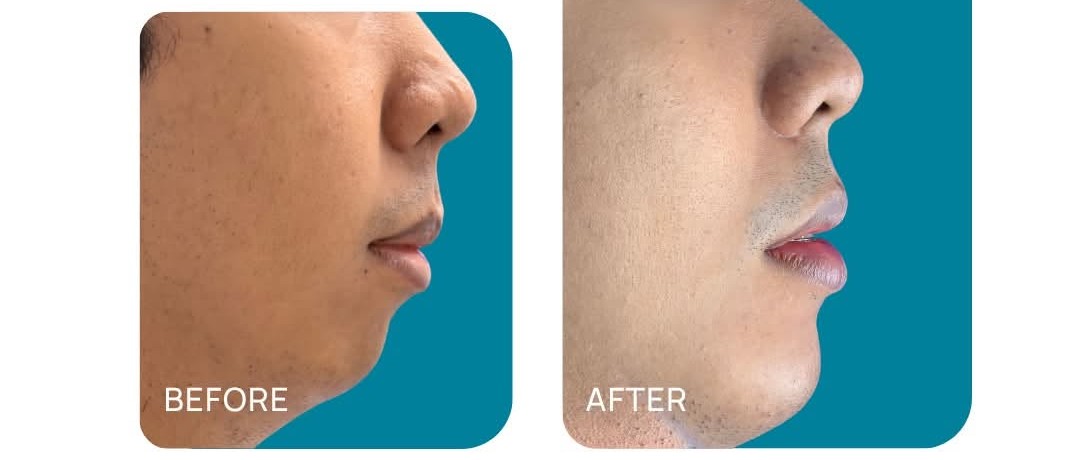
Results
Shared with the patient's permission.
What to know
What is chin augmentation?+
A chin that sits back can make the nose look larger and the profile look unbalanced. Chin augmentation brings the chin forward, usually with an implant, to improve the balance of the face.
What happens during surgery?+
Your surgeon places an implant in a pocket at the front of the chin, through a small incision under the chin or inside the mouth. The incision is then closed. The choice of implant size and shape depends on your face.
Recovery: what to expect+
Expect swelling, tightness and some bruising around the chin. You may be asked to eat soft foods and keep your mouth clean for a while, and to avoid pressure on the chin. Swelling goes down over weeks.
Risks and things to know+
Risks include infection, the implant shifting, asymmetry, numbness of the lip or chin, scarring and the possibility of removal or revision. Results differ from person to person, and any procedure can need a touch-up or revision.
Questions to bring to your consultation+
How much projection is right for my face? Will the incision be inside the mouth or under the chin? What happens if I want the implant changed later?
This page is general information, not medical advice. Your surgeon will talk about your own situation during your consultation.
Interested in chin augmentation?
Request a consultation and our team will confirm your schedule by text or email.
Book a consultation